

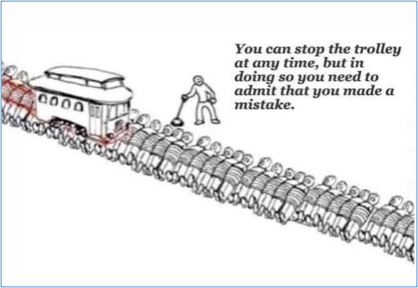
The Brussels-based Smoke Free Partnership (SFP) has come out against the legalisation of nicotine pouches in Germany. It says its members, European health organisations, back the German Medical Association’s call for the German government to maintain the ban on selling nicotine pouches [Press release, 14 September, 2026].
This coalition of dozens of organisations that supposedly exist to protect health has declared:
“We cannot afford to trade public health for revenue and repeat the mistakes of the past by allowing commercial interests to shape the environment in which a new generation becomes addicted to nicotine. The short-term revenue gained today cannot justify the long-term cost of creating a generation living with nicotine addiction and its consequences. Young people deserve the opportunity to grow up free from nicotine addiction, not surrounded by an ever-expanding range of increasingly normalised and heavily marketed nicotine products,” said Erin Roman, Director of the Smoke Free Partnership.
Let us dig into what is going on here.
“Trading public health” - how bad are these pouches?
Nicotine pouches are oral nicotine products that allow users to absorb nicotine through the gums and mouth. Pouches are a far safer nicotine product than cigarettes and likely cause negligible health risks. This is easy to understand: they are smoke-free products; there is no smoke inhalation, no lung exposure, and no combustion or pyrolysis products. When characterised by biomarkers (toxicant exposures measured in blood, saliva, or urine), pouches show far fewer measurable toxicants and far lower levels of toxicant exposure than cigarettes. This is exactly as anyone would expect, and it should not be a mystery to professionals in this field who earn money for their contribution to a healthier society.
Murkett et al. produced comparative risk estimates based on toxicant exposure data. Rating cigarettes at 100, they estimated nicotine pouch use at 0.1 - one thousandth of the cigarette risk. Based on Murkett et al., researchers at the International Monetary Fund produced the following relative risk graphic (annotation added):
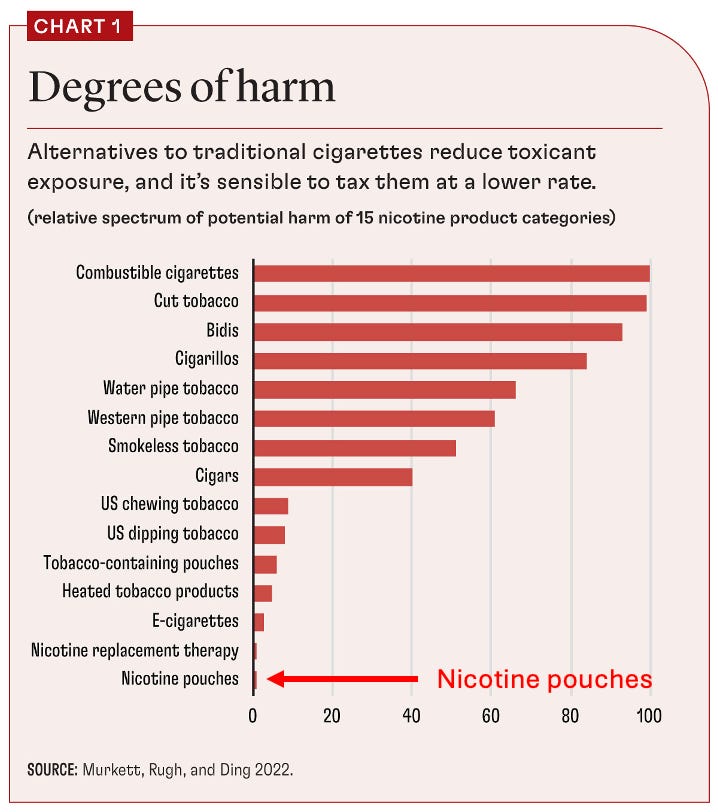
Naturally, the tobacco control experts and activists of SFP and its coalition partners are free to dispute this chart if they have decent evidence to the contrary. I would like to see them draw up their own. They haven’t, of course, because they can’t and therefore they won’t.
But I think the IMF’s use of the data here is a reasonable way to think about risk from a policymakers’ perspective and, therefore, the benefits of substituting high-risk products with low-risk alternatives.
Why would organisations supposedly concerned for health want to stop millions of people moving from the top bar of this chart to the bottom?
“A new generation becomes addicted to nicotine”
The answer they give to the question above is “nicotine addiction”, as if that ends the argument. Well, if they banned pouches, there would be plenty of options for becoming addicted to nicotine using smoking products or vapes. So that makes little sense.
There would also be the nasty business of illicit trade in tobacco and nicotine products, including pouches, which exposes young people to criminal suppliers and other illicit goods and services, and imposes a range of social harms through corruption, extortion, violence, and numerous costs.
However, the argument above is merely pragmatic - bans won’t work, will do more harm than good, and will fail due to behavioural substitution (e.g. to smoking), illicit trade, and risky workarounds.
The bigger, more principled argument is that nicotine is a recreational substance that people like or find useful in the same way they use caffeine, alcohol, cannabinoids or other substances. If it doesn’t cause much harm, then its use should not be described as an addiction, and the case for a major intervention, such as prohibition, to prevent its use fails. [See formal definition of addiction - and my full discussion of Nicotine for Policymakers] You can’t just say the word “addiction” or “youth” and expect it to justify any measure, no matter how likely to fail and without regard for adult autonomy.
Young people always warrant concern, but we have to recognise many will take up nicotine whether we like it or not. Do these organisations think that without nicotine pouches, nicotine uptake will somehow just stop? That is their incredible implicit assumption. It has never been right and probably never will be. Most youth uptake of a nicotine product is an alternative to uptake with a different product.
Why would they deny young people who take up nicotine the safest possible nicotine product? Note that 9.5% of German youth aged 14-17 currently smoke (DEBRA) - wouldn’t it be better if they didn’t smoke? Why would we deny all adults the safest nicotine products to protect adolescents? We can control marketing and retailing; that is a sufficient and proportionate response.
None of this appears to have troubled the Smoke Free Partnership. The finest minds in tobacco control haven’t done any thinking.
“Mistakes of the past” - the snus ban
Smoke Free Partnership laments mistakes of the past. So do I. The biggest mistake of the past, from which these organisations have apparently learned nothing, was the EU ban on snus (pouches of smokeless oral tobacco), imposed in 1992 (Directive 92/41/EC). On joining the EU in 1995, Sweden was exempted, and Norway never joined - both now enjoy low levels of smoking and smoking-related disease, though not unusually low levels of nicotine use.
Since the 1992 snus ban in Europe, 20 million Europeans have died from smoking-related disease, with over 554,000 per year still dying [GBD data 1992-2023 smoking and secondhand smoke]. Germany alone accounts for more than 30% of the EU cumulative mortality total (6.45 million) since 1992 and ongoing annual deaths (178,000).
Things could have been done very differently. Depending on uptake and subsequent innovation, the European Union could have reduced this ghastly total by several million by encouraging snus uptake at the expense of smoking and expediting the introduction of pouches. That would have aligned with developing the EU internal market and free movement of goods with a high level of health and consumer protection. Instead, it decreed that about 100 million European Union adult citizens (1 in 4) should be denied these far safer options by making them illegal. While, of course, cigarettes remain ubiquitously accessible and legal.
There were opportunities to reverse the snus ban in 2001, 2004, 2014, and 2017, but the Commission and its client activist groups put their crusade against tobacco and the tobacco industry ahead of a few million people dying in agony or living in misery.
Now they want to build on this impressive record of failure by pressing for bans on pouches in member states like Germany, no doubt hoping that the European Union will adopt this utterly stupid idea if enough member states can be persuaded.
The problem isn’t “allowing commercial interests to shape the environment”; it’s governments allowing these organisations and their weird evidence-free beliefs to shape the policy environment.
Lessons from the snus ban - comparing Sweden and Germany
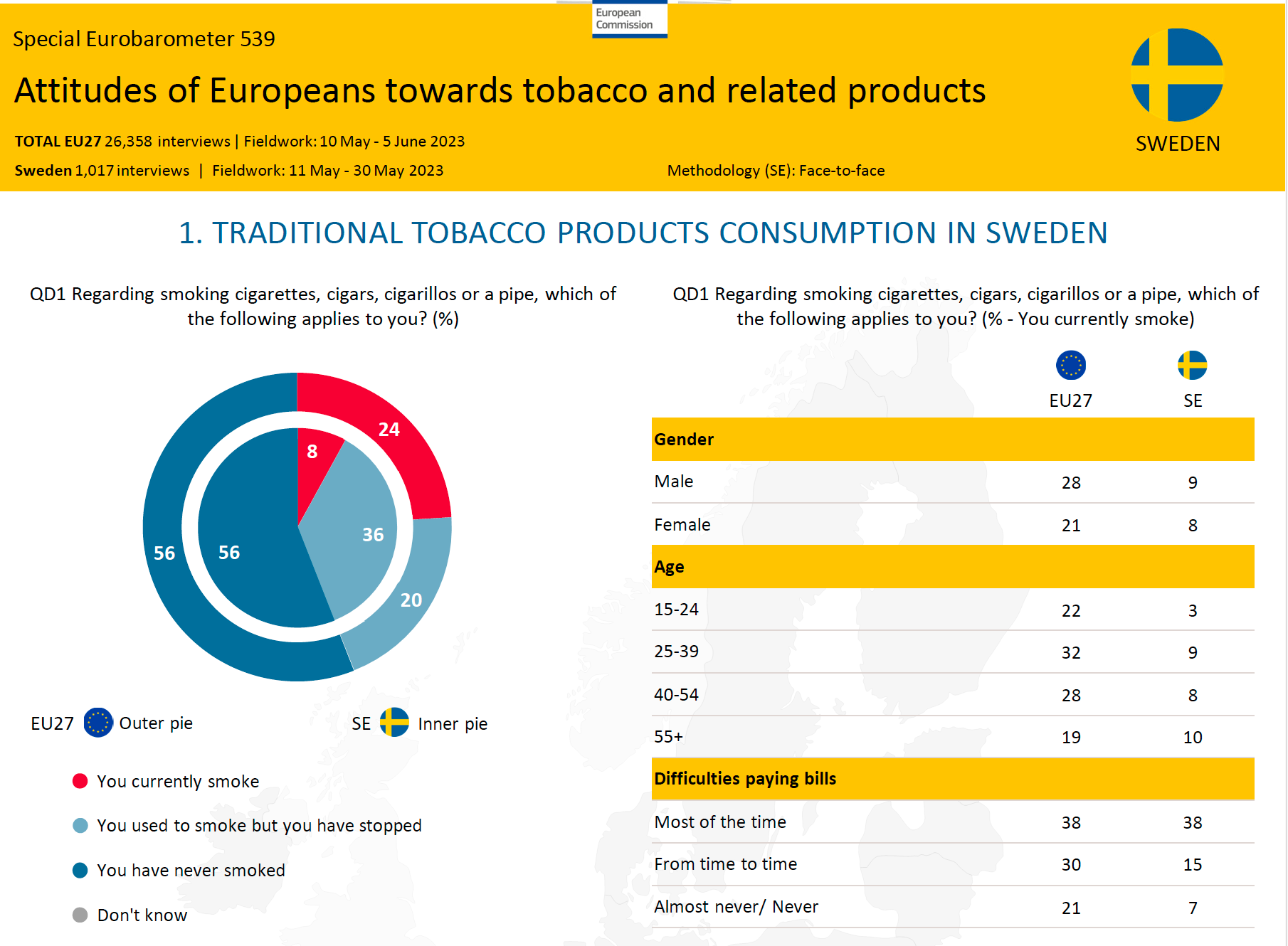
Here are Sweden’s data from the Eurobarometer survey, which is taken across the EU, using a common methodology. Sweden’s smoking prevalence: 8% in this survey - about one-third of the EU average. And, as we’ll see below, about one-third of Germany’s.
Germany has high levels of smoking… with a 24% smoking prevalence, according to the most recent Eurobarometer survey
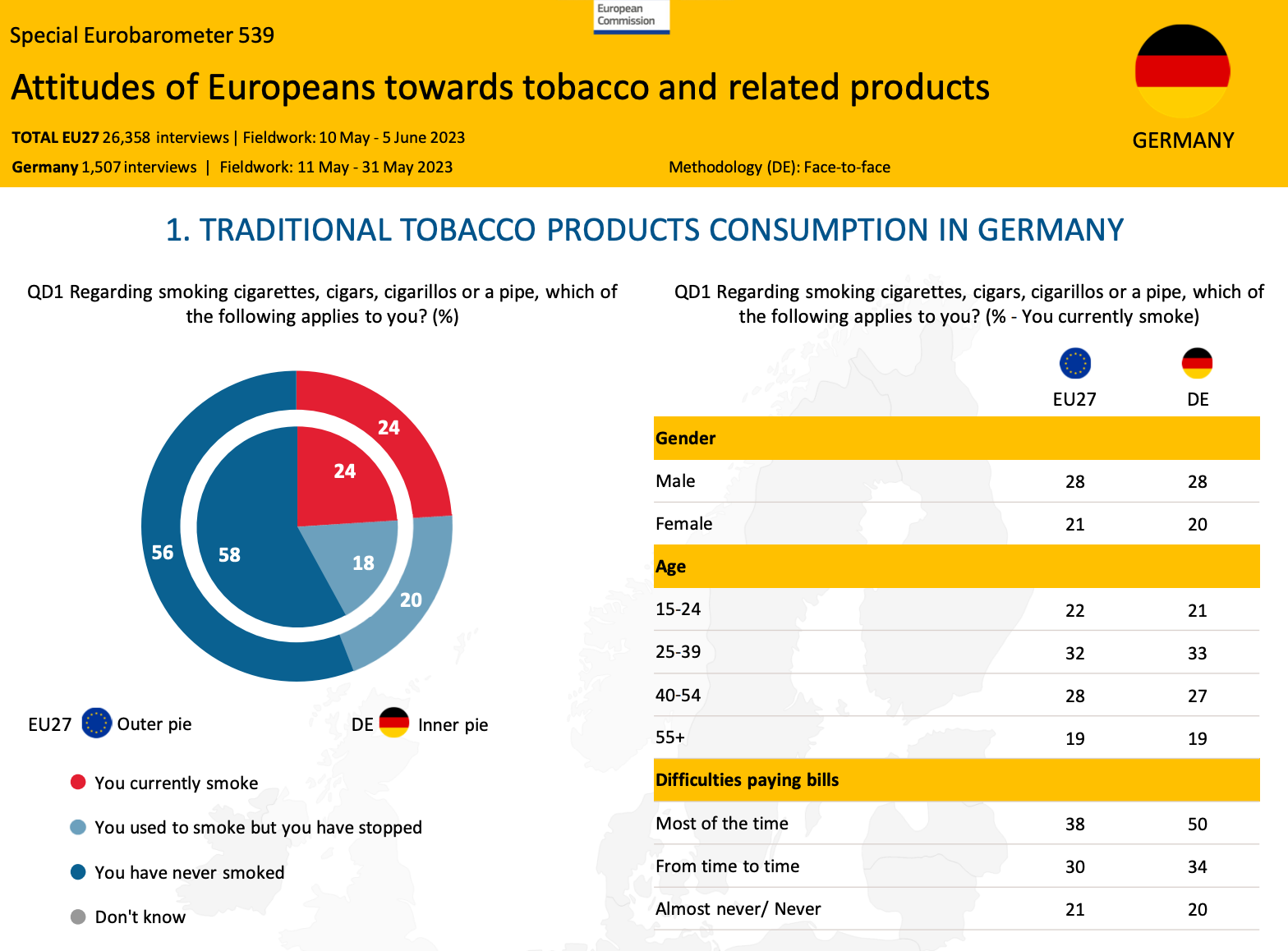
… or 33% smoking prevalence according to Germany’s own DEBRA study
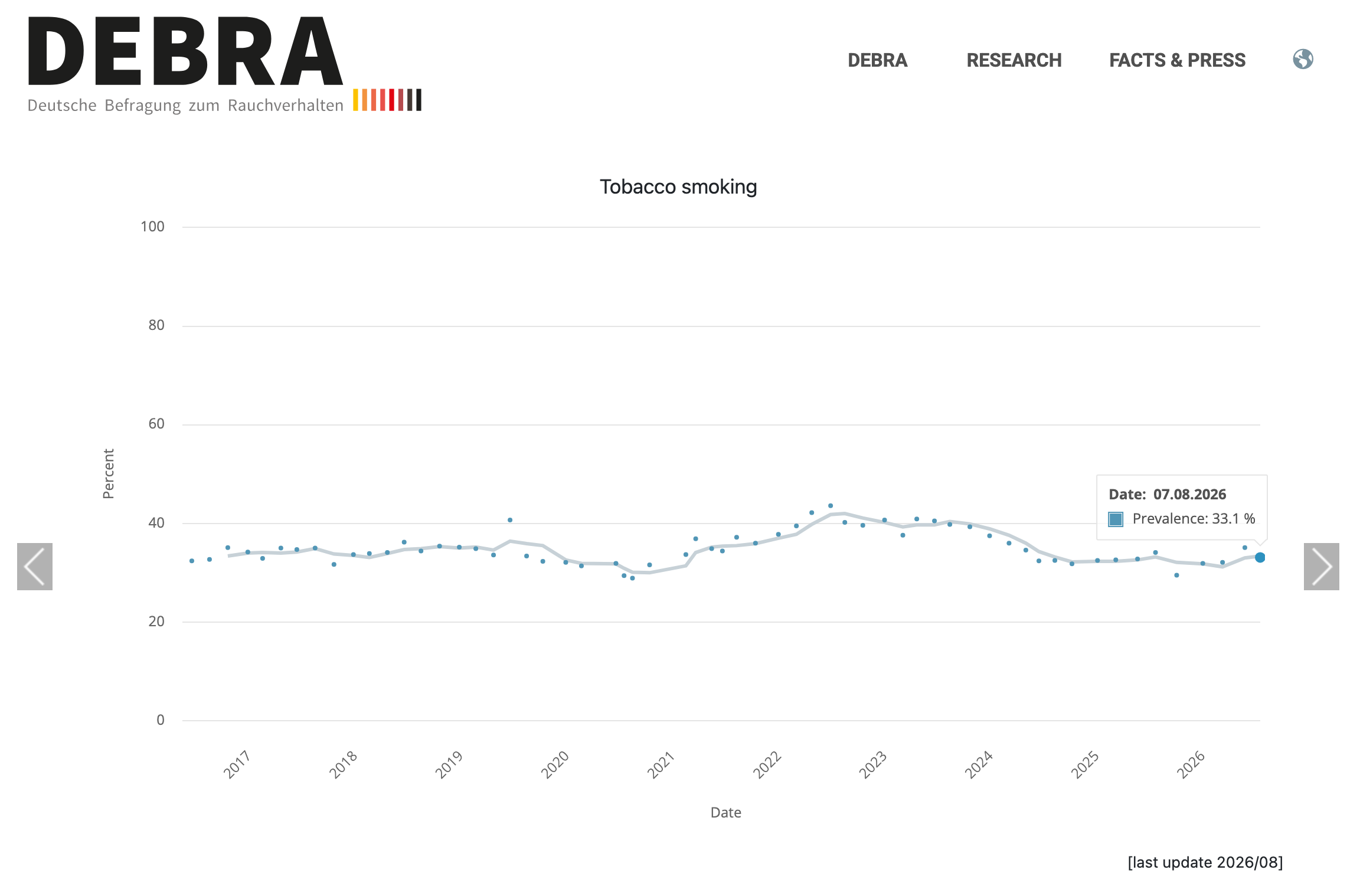
Germany has about 70 million adults aged 18 and over, so the German smoking population would be 17-23 million people. New starters will join every day, too. The misnamed “Smoke Free Partnership” wishes to deny these millions of people the opportunity to use a smoke-free product that is unlikely to pose ANY material risks of cancer, cardiovascular disease or chronic lung conditions like COPD.
Cancer societies make clowns of themselves
Smoke Free Partnership is funded by several prominent cancer societies, including Cancer Research UK, which really should know better but has lost its way on tobacco policy in recent years.
So does this proposed ban make sense for anyone who cares about cancer? Ban the negligible-cancer product, and protect the high-cancer product from competition?
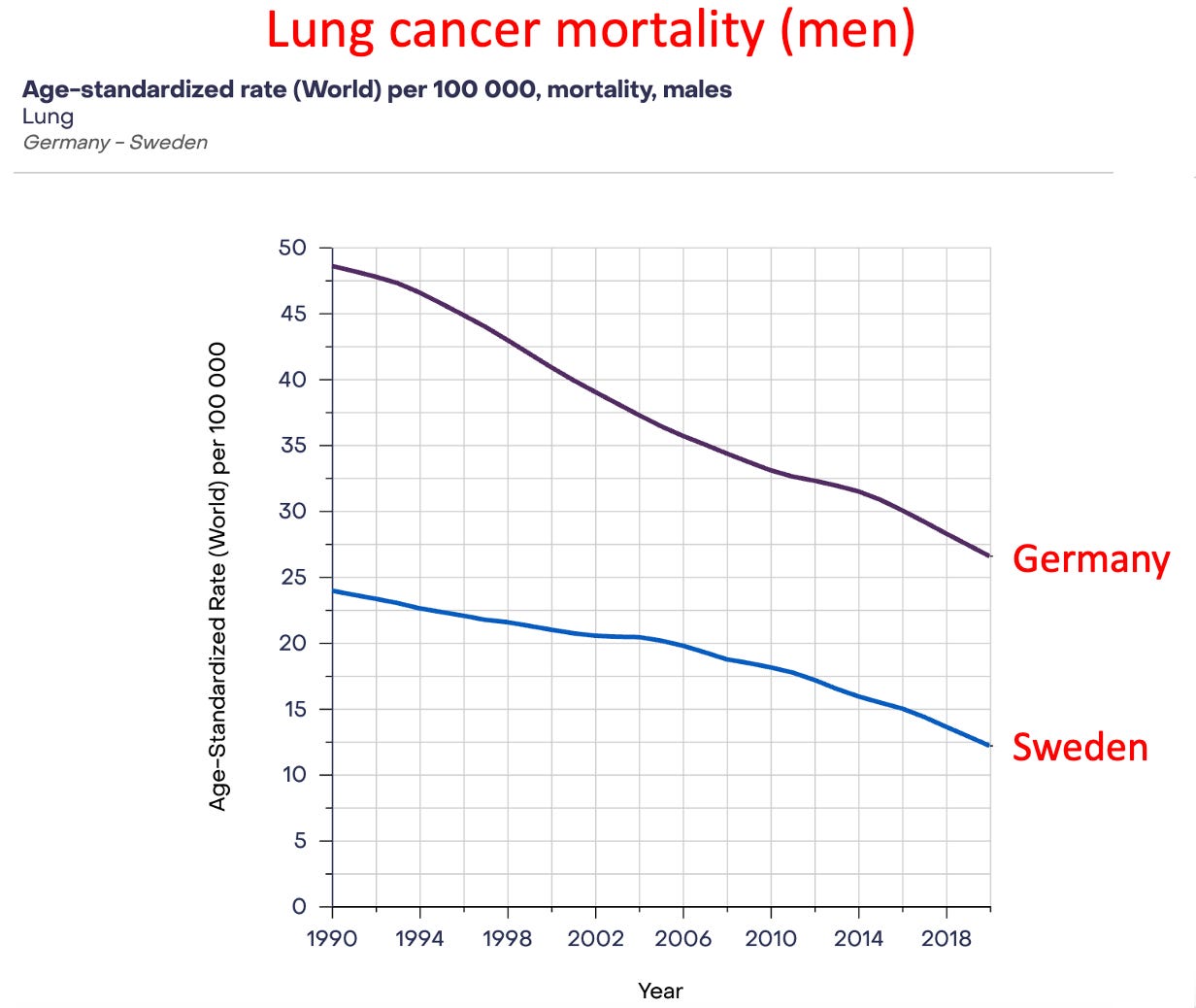
Again, we can look at the difference between cancer mortality in Germany and Sweden, where a high proportion of nicotine use is through snus. Using data from the IARC Global Cancer Observatory, we take male lung cancer risk (the strongest benchmark of smoking-related risk) and see that Germany has about twice the rate of Sweden.
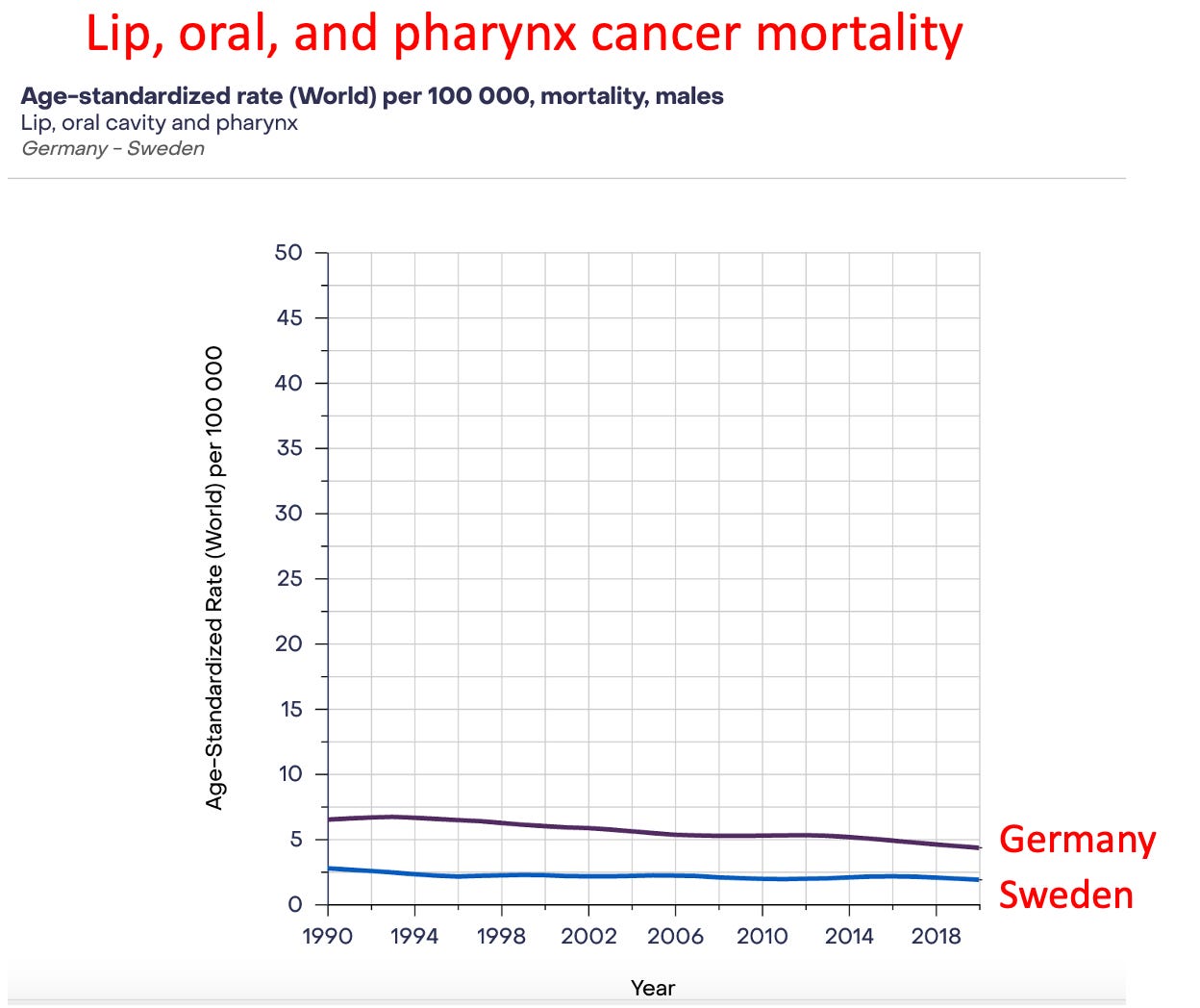
… and just in case someone objects that the greater use of oral tobacco in Sweden must mean higher rates of oral cancer, then, sorry, but that’s wrong. Both countries have much lower oral cancer mortality than lung cancer, but Germany also has twice the oral cancer rate of Sweden (plotted on the same scale as lung cancer).
So here are some questions for these cancer organisations.
If you are a cancer organisation, raising money to fund research and end cancer, wouldn’t you be relentlessly curious about this gigantic difference in smoking-related cancer between Germany and Sweden?
Wouldn’t you wonder if this Nordic experience might be replicated at scale in other European countries or worldwide?
Wouldn’t you think very carefully before endorsing bans on products that account for the low rates of smoking and smoking-related disease in Sweden compared to Germany? Surely, you would proceed with an abundance of caution.
Wouldn’t you think twice before directing the proceeds of all that tin-rattling, fun-running, and legacy-leaving into insane activist coalitions that want to ban the safest products with negligible cancer risks while leaving the most dangerously carcinogenic easily available everywhere? How would you honestly explain that to your donors?
In other words: What is wrong with you?
Personal accountability
We are often encouraged to play nice or #BeKind. Sure, that’s always the best way.
But… let’s think about what is happening here.
A few dozen comfortable middle-class activists want to influence legislation that denies about 20 million people in Germany and about 94 million people in the EU lawful access to the safest forms of consumer nicotine. These activists know, or should know, that doing this would have inevitable harmful unintended consequences such as the formation of black markets, more smoking, and protecting the cigarette trade from competition.
They have proof-of-concept evidence from snus use that this approach can save thousands, and maybe millions, of lives if scaled up successfully.
They also backed a European Union ban on snus despite overwhelming evidence that it has had a highly positive effect for health in the Nordic countries where it is more widely used. They rejected multiple opportunities to lift the ban, and now they want to block a new way out of the mess that they created in 1992 - migration to nicotine pouches as an alternative to snus (pouches are sometimes known as “white snus”)
We have to get away from the abstract nature of policymaking and legislative procedures and recognise that the actions of these people establish a causal pathway that starts in the legislative change they seek, but ends in millions of people dying in agony of cancer and living in misery with COPD or heart failure.
That’s what to be angry about… the casual indifference to human suffering.
Yet no one calls them to account for their reckless negligence, cynicism and indifference to the human suffering that they cause and should understand.
Organisational accountability
The same arguments apply to organisations. These coalition members are supporting a policy position that would, if they get their way, initiate a causal chain that leads to European citizens dying of cancer and living with the misery of COPD and heart damage.
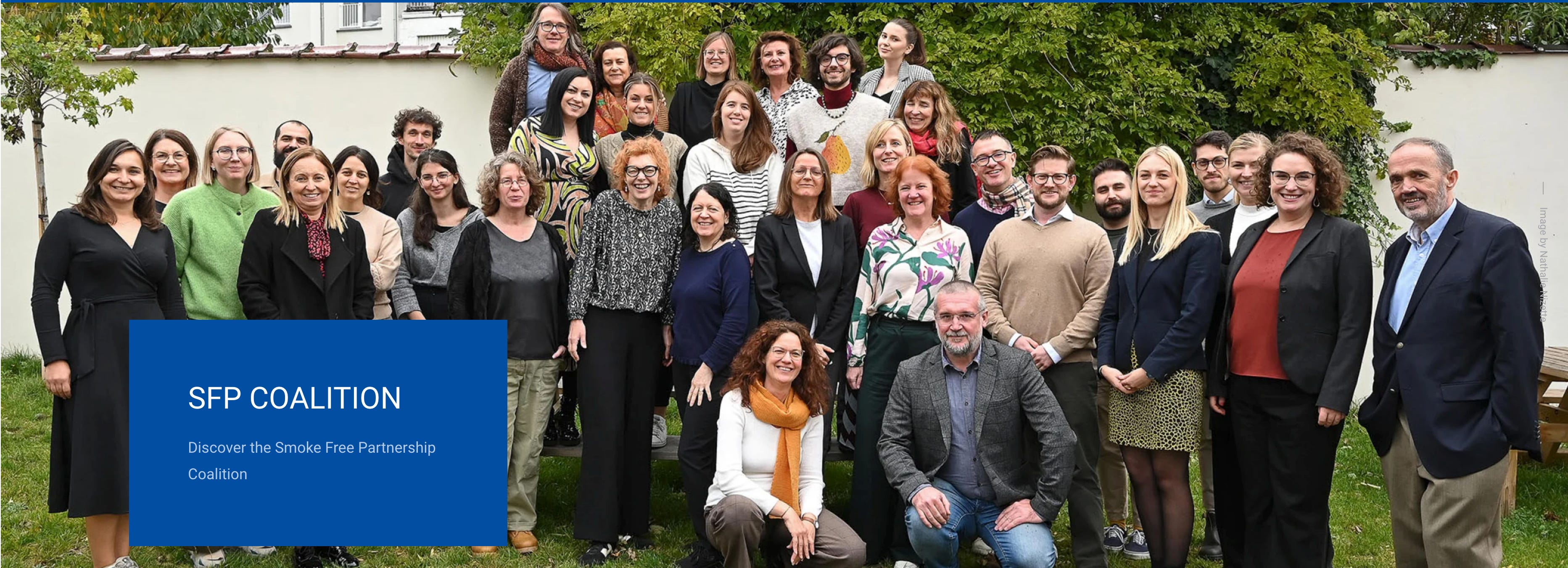
You can view the organisations in the coalition here.
Everyone involved should be ashamed.
Further reading
A great Substack post by Roger Bate of Reason Foundation: Europe Is Protecting Cigarettes from Their Competitors. If you’ve liked this post, there’s more to see here.
Perhaps they can give examples of the public health gains when at other times a deadly product was left very widely available while a massively less hazardous alternative was banned?
If not, perhaps they could actually do a rational risk-benefit analysis before coming up with such an idea.
A very common argument against safe(r) nicotine products is “we just don’t know yet”. In fact, it would be difficult to come up with more compelling clinical evidence than the comparative lung cancer incidence between Sweden and Germany. These EU policy decisions and the people that are making them are actually killing people.